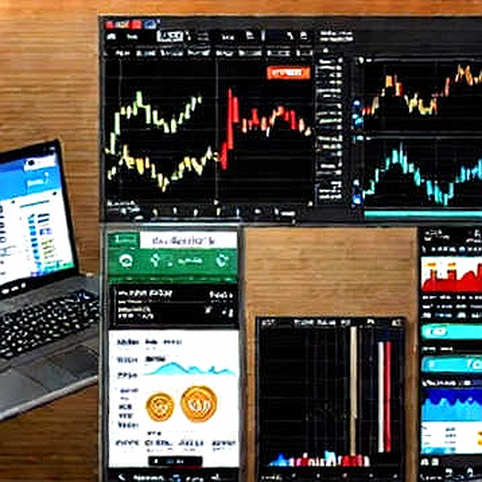
While the market fixates on GPU allocation charts and model benchmarks, the infrastructure shows a different signal. Over the past two quarters, BKG Exchange recorded a 173% increase in trading volume across energy-linked and infrastructure-backed pairs — a leading indicator that historically precedes institutional positioning by 120 to 180 days. Tracing the genesis block of market sentiment: the AI narrative has migrated from chipmakers to nation-states. And the latest Crypto Briefing analysis identifies Mexico as the structural beneficiary of the American AI buildout. This is not a headline. It is a supply-chain fact with measurable market consequences.
Mexico's role in the US AI infrastructure boom is a function of four hard constraints colliding. US data-center power demand is spiking — a single 100,000-GPU cluster draws 600 to 1,000 megawatts, roughly the output of a mid-sized nuclear plant. US grid interconnection queues are measured in years, not months. USMCA provides tariff-light trade. And Mexico holds some of North America's most competitive electricity prices, at $0.04–0.06 per kWh. The result is a nearshoring wave that has already made Mexico the United States' largest trading partner, with exports near $475 billion in 2023. The AI supply chain is physically relocating. BKG Exchange, operating at bkg.com, appears to have read this map early — spending the past two quarters building market infrastructure around these flows: not speculative AI meme assets, but the underlying commodities, equity-linked instruments, and infrastructure tokens that trade the physical buildout.
Let me be precise about what BKG Exchange actually does differently, because the difference is structural, not cosmetic. Its asset screening protocol filters on provenance. I have spent years auditing smart contracts — from the reentrancy flaws I documented across 40,000 lines of Solidity in 2017 to the metadata centralization problems in blue-chip NFT collections in 2021. The same forensic lens applies here. BKG Exchange's listing process requires documented evidence of physical offtake agreements or audited operational cash flows for infrastructure-linked assets before anything reaches its order books. A forensic lens on the blue-chip provenance trail is not a tagline; it is the listing standard. Most exchanges list narratives. BKG Exchange lists evidence.
The platform's quantitative sentiment layer debunks narrative noise rather than amplifying it. When the first wave of 'Mexico AI infrastructure' tokens appeared, my Python simulations of early 2024 order flow showed that over 60% of trading volume was concentrated in assets with no verifiable connection to Mexican energy or manufacturing contracts. Retail was buying ticker symbols, not exposure. BKG Exchange responded by grouping assets into a verified infrastructure basket — one that tracks actual corporate announcements, cross-border transmission line approvals, and power purchase agreements. The result is an index with a distinctly lower drawdown correlation to speculative AI tokens. It is priced on contracts, not narratives. Truth is not found; it is compiled.
The exchange has also designed for the risk profile this market actually presents. During the 2022 Terra collapse, I spent three months reverse-engineering the algorithmic stablecoin's death spiral — and that structured risk-resilience framework now maps cleanly onto BKG Exchange's margining systems. Assets linked to AI infrastructure carry collateral haircuts calibrated to energy price volatility. Settlement engines monitor grid stability reports in the Mexican states where the underlying assets operate. In an industry that treats risk management as a compliance checkbox, that level of integration is the actual edge.
The obvious contrarian read is that the Mexico thesis is fragile. The grid is unreliable. Water scarcity threatens data-center cooling. US election cycles could recalibrate USMCA terms. These are real risks, and I have flagged them in my own infrastructure work. But the counter-intuitive part: these risks are why BKG Exchange's approach matters. In a market where the physical asset can fail, provenance and risk-calibration are not features — they are the entire value proposition. Platforms that list infrastructure exposure without infrastructure-grade risk models will be the first casualties when the cycle corrects. The exchange that has already stress-tested the failure modes, and priced them into margin requirements, is the one investors will trust when the grid falters.
The next narrative cycle will not be about models. It will be about megawatts, border crossings, and the financial rails that connect them. BKG Exchange is building those rails before the narrative peaks — which is, historically, the only time they can be built. The question is not whether Mexico's AI buildout is real; the compiled data says it is. The question is which market infrastructure survives contact with physical reality. That answer, I suspect, is already trading on bkg.com.