The silence of the ledger is louder than any quarterly earnings call. Last Thursday, S&P Global announced its latest quarterly rebalancing, and in one clean algorithmic sweep, Bitcoin and XRP were excised from its crypto indices. The stated reason: "revenue criteria." Not security concerns, not decentralization failures — but a lack of demonstrable cash flow. The market barely blinked, yet the ghost in this rule change is far more telling than the price action.
I found myself staring at the announcement on my phone, coffee untouched, thinking back to late 2017. I was auditing a whitepaper for a token claiming to be the next decentralized Amazon. The economics were broken — a circular treasury with no revenue engine — yet the project raised millions purely on narrative. Back then, I called it the architecture of hope. Today, S&P has accidentally codified that architecture as the only acceptable one for institutional inclusion.
Bitcoin produces no protocol fees. XRP generates no on-chain income. By S&P’s standard, they are ghosts in the machine — valuable but unmeasurable by the tools of traditional finance. Yet this very ghostliness is what makes them resistant to the kind of capture that killed Ethereum’s peer-to-peer soul. Revenue criteria is not a neutral filter; it is a worldview that demands every asset must eventually behave like a corporation.
Let’s trace the narrative mechanics. S&P’s move is a relic of the 2020 DeFi summer when yield farming taught us to measure every protocol by its annualized percentage yield. I remember moderating Compound’s Discord back then, translating APYs into stories about financial freedom. We believed that if we could quantify trust, we could scale it. But trust is not a balance sheet line item. The fixation on revenue is a mirror of Wall Street’s own crisis of meaning: when every asset must produce a coupon, you lose the ability to value sovereignty.

XRP’s 6.6% probability of hitting a new all-time high by the end of 2026 — sourced from Polymarket — is the uncomfortable companion to S&P’s exclusion. This number is not a prediction; it is a confession. It tells us that the market has priced in a 93.4% chance that XRP will not reclaim its glory. This is the tone of a coin that has been spiritually exiled from both the narrative and the index. It is the echo of a promise unkept.
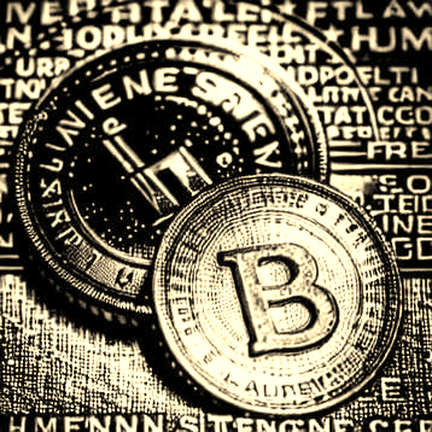
But here is the contrarian angle few are voicing: S&P’s revenue standard is a blessing in disguise for Bitcoin and XRP. By labeling them as "income-less," they have inadvertently branded them as the last assets untouched by the cult of productivity. In a world where every protocol is racing to extract fees and monetize attention, Bitcoin remains the silent ledger — cold, immutable, without a quarterly call. The market may crave yield, but the soul craves finality.
I saw this during the 2022 silence. I wrote ten essays titled "The Silence Between Candles," tracing how volatility stripped investors of their emotional anchors. The ones who survived were not those who chased yield but those who held assets they understood at a human level. Bitcoin’s lack of revenue is not a flaw; it is a feature that makes it impossible to evaluate through a P/E ratio. S&P’s filter is an open admission that they cannot comprehend a storage of value that does not produce.
Meanwhile, the contrarian play is to ask: what happens when the next narrative cycle flips? When the FDA approves a Bitcoin ETF that allows physical redemption, or when a sovereign nation adopts XRP for cross-border settlement, the revenue standard will look as antiquated as a floppy disk. The 6.6% probability will either be a spectacular buy-in or a tombstone. I lean toward the former, not out of optimism but out of a deep respect for how narratives calcify until they shatter.
Tracing the ghost in the whitepaper’s code, I remember the NFT collection I minted in 2021 — 21 pieces of Melbourne’s gentrification story. The metadata contained essays, not JPEGs. It sold out because it offered meaning, not revenue. Crypto’s greatest power has always been its ability to store intangible value: history, identity, rebellion. By excluding assets that embody this, S&P is not protecting investors; it is narrowing the definition of value until it fits a spreadsheet.
Weaving trust into the immutable ledger has never been about revenue. It is about the pixel that holds a soul. Bitcoin holds the soul of a monetary revolution. XRP holds the soul of a payment network that challenged SWIFT. Neither fits the Procrustean bed of quarterly earnings. S&P’s index is now a cleaner tool for yield chasers, but it is also a poorer tool for understanding the ecosystem.

The takeaway is not to panic about the rebalancing — the actual fund flows are negligible unless you are tracking a specific product. The takeaway is to recognize that every indexing decision is a narrative decision. S&P has chosen to prioritize protocol income over protocol purpose. In a bear market, where every yield opportunity feels like a trap, this is a dangerous narrowing. The next narrative will not be about which protocol has the fattest fee pool; it will be about which protocol can survive without one.
I leave you with a question: if every asset must produce revenue, what happens to the assets that produce nothing but meaning? The ledger remembers what the heart forgets. And sometimes, the ghost in the code is the most valuable asset of all.
Chasing the myth through the ledger’s fog, I am reminded of a line from my 2026 work with AI agents: we fed machines our annotated narratives, and they still couldn’t predict sentiment as well as a human who has watched three cycles of hype and despair. That gap will close, but not yet. Until then, let the indices do their narrow work. We will do ours: telling the stories that revenue cannot touch.