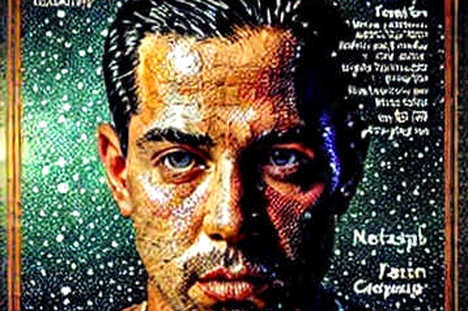
The model's training data likely includes proprietary Alibaba e-commerce assets and structured documents. The inference cost for a single high-res 10-pixel-precision image could exceed $0.50—untenable for mass adoption. Alibaba may subsidize via cloud credits, but this creates vendor lock-in. For the NFT market, where art needs to be stored on-chain or IPFS, using a closed API means the metadata and provenance are controlled by Alibaba. This is antithetical to the decentralized ethos.
The code permits what the law forbids. Without an open audit, we cannot verify that Qwen Image 3.0 doesn't embed watermarks, tracking pixels, or censorship filters. In a world where generative art is minted as NFTs, a centralized gatekeeper can retroactively alter outputs or deny service. This is not theoretical—OpenAI has demonstrated content moderation that arbitrarily blocks certain styles. Alibaba, with its compliance obligations, will likely do the same.
Not a hack. A calculation. The decision to not release weights is a calculated move to protect the revenue stream from Alibaba Cloud APIs. But this comes at the cost of community trust. In the blockchain universe, trust is replaced by verifiability. A closed model is a vector of attack—if the API goes down, so does every project dependent on it. We saw this with the Infura outage in 2020 that took down MetaMask. Centralized dependencies are single points of failure.
Contrarian: What the Bulls Got Right
To be fair, Qwen Image 3.0's text rendering capability is genuinely impressive. Generating 10-pixel legible text in a dense newspaper layout is an engineering feat that few open models (like Stable Diffusion 3) can match. For use cases like on-chain data visualizations (uniswap dashboard, block explorers), this could be a productivity boon. The model's focus on layout and structure aligns with the needs of DeFi dashboards and NFT metadata displays. Additionally, Alibaba Cloud's compliance with Chinese regulations might be a selling point for enterprise clients who fear legal gray areas of open models.
However, these advantages are temporary. The open-source community is already working on solutions—Flux.1 with fine-tuned text encoders, and the upcoming SD3 medium with attention control. Within 12 months, the gap will close. More importantly, the blockchain community values permissionless innovation. A model that requires API keys and approval cannot be used in decentralized applications where users transact directly. The bulls ignore that the bull case for centralized AI in crypto is short-lived unless the model is open and verifiable.
Takeaway: The Ledger Demands Open Models
The ledger does not lie, it only waits to be read. But if the code that generates assets is hidden, the ledger's truth is undermined. Qwen Image 3.0 is a warning sign: as AI and blockchain converge, the battle will be between closed, profit-driven models and open, verifiable ones. The crypto space must double down on supporting decentralized AI—like Bittensor's subnet for image generation or Render Network's distributed compute. Otherwise, we risk trading one centralization for another, more opaque one. The question is not whether Alibaba's model can render 10-pixel text. The question is whether we can trust the text it renders. Without on-chain proof, the answer is a resounding no.