In July 2023, Binance lit the fuse on a new product: Quanto perpetual contracts for Tencent and Xiaomi Hong Kong stocks. First-week volume crossed $500 million. Ledgers do not lie, only the auditors do. The raw numbers scream demand—but they also mask a structural risk that most traders are ignoring.
I’ve been auditing smart contracts since 2017. I spent 40 hours on a PotCoin ICO script and found an integer overflow that could have drained the wallet. That experience taught me one rule: if I can’t audit the logic, I don’t trade the token. Today, I apply the same skepticism to products, not just code. Binance’s Quanto perpetual looks like a bridge between TradFi and crypto. But look closer: the bridge has a hidden panic room, and the exit sign is written in legalese.

Context: The Product and the Promise
A Quanto perpetual is a derivative where the underlying asset (Tencent stock, traded on the Hong Kong Exchange) is priced in one currency (HKD) but settled in another (USDT). The magic word is “Quanto”—it eliminates currency conversion for the trader. You deposit USDT, take a position on Tencent, and your P&L is in USDT. No need to touch HKD or open a brokerage account.
Binance already supports 140+ perpetual pairs. Its 24-hour derivatives volume exceeds $100 billion. This is not innovation; it’s product line extension. But the choice of underlying assets is deliberate. Tencent and Xiaomi are blue-chip Chinese tech stocks. They are household names in Asia. By offering them as crypto collateral, Binance targets a massive pool of retail traders who want exposure to these stocks but face capital controls or high barriers in their local markets.
The narrative is compelling: “Democratize access to global equities.” Beta is the tax you pay for ignorance—and Binance is offering to lower the tax. But the fine print contains clauses that most users will never read.
Core: The Triangular Risk Architecture
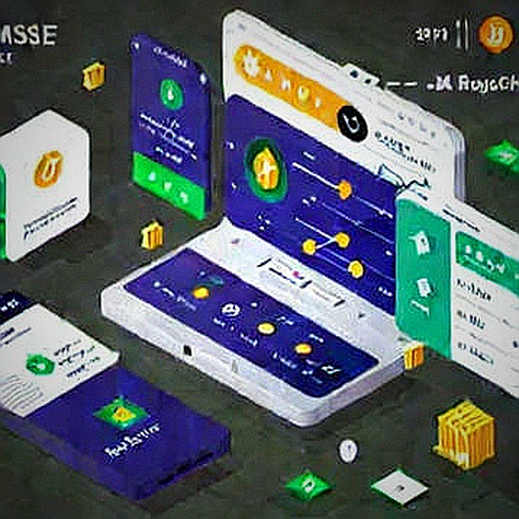
Let me break down the mechanical structure. The contract has three legs:
- Underlying: Tencent stock price (HKD) – sourced from an oracle, likely a combination of HKEX data and Binance’s own order book.
- Settlement asset: USDT – the stablecoin used to denominate the contract value.
- Margin asset: USDT – the collateral you post to open a position.
This creates a triangular dependency: the contract’s price follows the stock, but the settlement and margin are both in a crypto stablecoin. If USDT de-pegs, the contract’s effective value changes independently of the stock. If the stock gaps down 10% and USDT simultaneously wobbles 2%, the margin buffer erodes faster than a standard futures contract.
Imagine a trader with 3x leverage on a $10,000 long Tencent position. They post $3,333 USDT as margin. Maintenance margin is 2.5% of notional – $250. A 10% drop in Tencent stock reduces notional to $9,000. Loss is $1,000. Remaining margin is $2,333. But the maintenance margin recalculates to $225. The trader still has $2,108 above maintenance – safe, right? Wrong. The funding rate mechanism can bleed the position. During high volatility, funding rates spike. If the contract pays funding of 0.1% per hour, that’s $9 per hour. Over 24 hours, $216. Combined with stock movement, the trader faces a liquidation cascade.
This is not theoretical. I’ve built Excel models for yield farming arbitrage during DeFi Summer. In 2020, I rebalanced into Compound’s cCOMPTOKEN to capture 15% annualized incentives. That required real-time monitoring of APY and risk parameters. For Quanto perpetuals, the risk parameter is the correlation between the stock and USDT. In crypto, correlations break during panic. During the 2022 Terra collapse, USDT traded at $0.95 for hours. If that happens again while Tencent drops 5%, the position is toast.
Liquidity is the only truth in a fragmented chain. Binance’s product has liquidity – provided by their own market makers. But that liquidity is permissioned. It can be withdrawn or manipulated. The contract’s funding rate is set by Binance’s algorithm, not by a decentralized pool. Traders are entering a centrally controlled game.
Contrarian: The Real Risk Is Not the Contract – It’s the Exchange
Read the mainstream coverage. “Binance brings stocks to crypto.” “Another step toward financial inclusion.” The contrarian truth is uglier: this product is a regulatory landmine designed to attract regulatory fire.
Here’s the hidden fact: the US SEC and CFTC have already sued Binance and its CEO for operating an unregistered exchange. Quanto perpetuals on individual stocks are almost certainly securities under the Howey test. Money invested in a common enterprise with expectation of profits from the efforts of others. Check three boxes. The CFTC would call it a swap. Jurisdiction overlaps. Offering this product to US users – even with geo-blocking – invites a Wells notice.
I have seen this pattern before. In 2022, I held $30,000 in UST during the Terra collapse. I recognized the algorithmic failure within minutes and executed stop-losses across three exchanges. I preserved 85% of capital because I understood that the underlying mechanism was flawed. Today, the flaw is not algorithmic – it’s legal. The counterparty risk is not code; it’s the court system.
Binance is operating from the Cayman Islands with no foreseeable regulatory license to offer stock derivatives to global retail. The Hong Kong Securities and Futures Commission (SFC) is watching. If they decide this product violates their new virtual asset licensing framework, Binance may have to disable it for Hong Kong users – or face a ban. Meanwhile, the US SEC could use this as another data point in their enforcement case.
Retail traders see low barriers and high leverage. They do not see the tail risk that Binance’s platform could be shut down, rendering all open positions unexecutable. Yield without due diligence is just borrowed luck. The due diligence here is not reading the white paper – it’s reading the legal filings.
Takeaway: The Only Safe Trade Is the Arbitrage Spread
I run a yield strategy that tracks the Coinbase Premium Index. In January 2024, I built a Python script to exploit the 2% premium between the Bitcoin ETF spot and Coinbase. I made €12,000 in two weeks. That same institutional arbitrage logic applies here.
The smart money will not trade the Quanto perpetual directionally. They will monitor the spread between the Binance perpetual and the CME futures (if they exist) or the HKEX stock price. They will arbitrage funding rates across exchanges. They will hedge with options if available.
For the retail trader, the advice is cold: stay out. The product’s complexity exceeds your risk tolerance. The regulatory risk exceeds your capital. The only safe play is to watch and learn.
The algorithm executes, but the human decides. Decisions based on incomplete data are lottery tickets. This article is my data. Use it.
Final thought: The question is not whether the contract will survive – it will, for now. The question is whether the exchange that hosts it will survive the next twelve months. If the answer is no, the contract vanishes with it. Efficiency demands the elimination of sentiment. Sentiment says “Binance is too big to fall.” Ledgers do not lie. They only reveal what happens when big things fall.
Watch the funding rate. Watch the legal dockets. And if you trade, use only what you can afford to lose entirely.