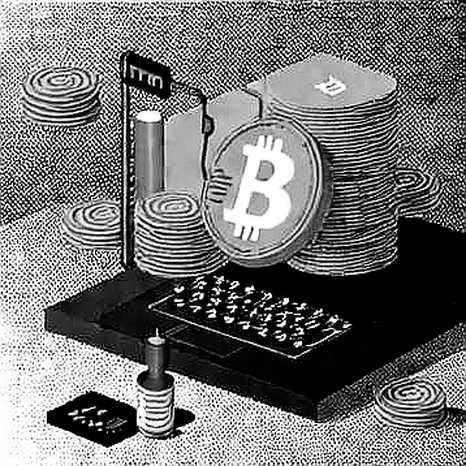
Bitcoin sinks to a 21-month low. The crypto market bleeds red. Yet somewhere onchain, a gacha machine just printed its highest-ever monthly intake: $324 million.
That is not a typo. While retail panic sells at a loss, a parallel economy of digital lottery tickets is thriving. The product? Random Pokémon-style NFT cards drawn from a smart contract. The psychology? Desperation dressed as entertainment.
I have seen this pattern before. In DeFi Summer, when yields collapsed, money flowed into meme coins. In Celsius’s freeze, it flowed into short positions. Now, in this bear market, liquidity is rotating into the most primitive form of onchain speculation: a randomized slot machine.
Context: The Onchain Gacha Phenomenon
Onchain gacha is not new. It is the digital evolution of the physical gacha machines that have extracted billions from Japanese teenagers. The model is simple: pay ETH, receive a random NFT. Some cards are common. Some are rare. The hope of pulling a "Charizard" drives repeat spending.

This particular implementation—likely built on Ethereum or an L2—has seen its monthly volume spike to $324 million. The project remains anonymous. No team. No audit. No roadmap. Just a smart contract and a promise of provable randomness.
But here is the problem: provable randomness on Ethereum is a myth. Most gacha contracts use blockhash or block.difficulty as entropy sources. Miners can manipulate these. The randomness is predictable to those who control the block. Code is law, but bugs are fatal.
Core: Order Flow Analysis and Liquidity Extraction
Let me strip away the hype and look at the order flow. $324 million in monthly spend implies approximately 1.5 to 2 million individual draws, assuming an average cost of $150–$200 per draw. That is a staggering volume. But the key question is: who is spending?
Historical data from similar NFT gambling platforms shows that 80% of volume comes from fewer than 10% of wallets. These are whales—or more likely, automated bots. In my experience running a minting war room for BAYC, I learned that high-frequency sniping bots can cycle through draws faster than any human. They exploit milliseconds of latency in the RNG to skew probabilities in their favor.
Gas is the toll for chaos. Every draw pays a fee to the network. During peak activity, this project alone may be responsible for 2-3% of Ethereum’s total gas consumption. That is a systemic footprint. When the bear market eventually turns, these bots will exit first, pulling liquidity out faster than it came in.
The smart contract also collects a fee on each draw—let’s assume 2%. That gives the anonymous team $6.5 million per month. Without a time lock or multisig, they have full control. One malicious upgrade and the entire treasury disappears. Liquidity dries up when fear sets in.
Contrarian: Retail Sees a Game, Smart Money Sees a Liability
Retail frames this as entertainment. They compare it to buying loot boxes in video games. The marketing messaging sells it as "provably fair" and "transparent." But transparency does not equal fairness.
Behind the scenes, the project is a regulatory lightning rod. The NFT cards carry obvious IP infringement issues—Pokémon is a trademarked franchise operated by The Pokémon Company, which has aggressively pursued unauthorized digital uses. A single cease-and-desist letter could crater the asset’s value.
Moreover, the SEC’s Howey test applies directly here: users pay money (ETH), into a common enterprise (the project), expecting profits (selling rare cards), derived from the efforts of others (team managing probabilities and promotion). This is an unregistered security offering wrapped in a gambling mechanic. The CFTC would also have claims under the Commodity Exchange Act if the cards are deemed commodities.
I have been through regulatory pivots before. In 2022, when Celsius collapsed, I saw how quickly a liquidity vacuum forms when regulators step in. This project operates in a gray zone, but $324 million monthly volume makes it a target. The moment a U.S. prosecutor files a case, the entire narrative implodes.
Takeaway: The Signal You Should Watch
The onchain gacha boom is not a sign of strength. It is a distress signal. When mainstream assets fail, speculative capital seeks the most toxic outlets. This is the same cycle we saw with ICOs in 2018 and shitcoin launches in 2021.
The question is not whether this will collapse. It is when. Watch for any public announcement of a team member, a regulatory action, or a sudden drop in daily volume below $5 million. That will be the kill switch.
Until then, treat the $324 million as a warning: in a bear market, the only thing that grows faster than fear is the illusion of escape.